Stitched, Splined or Staple-Gunned: Choosing a Binding That Survives Real Readers
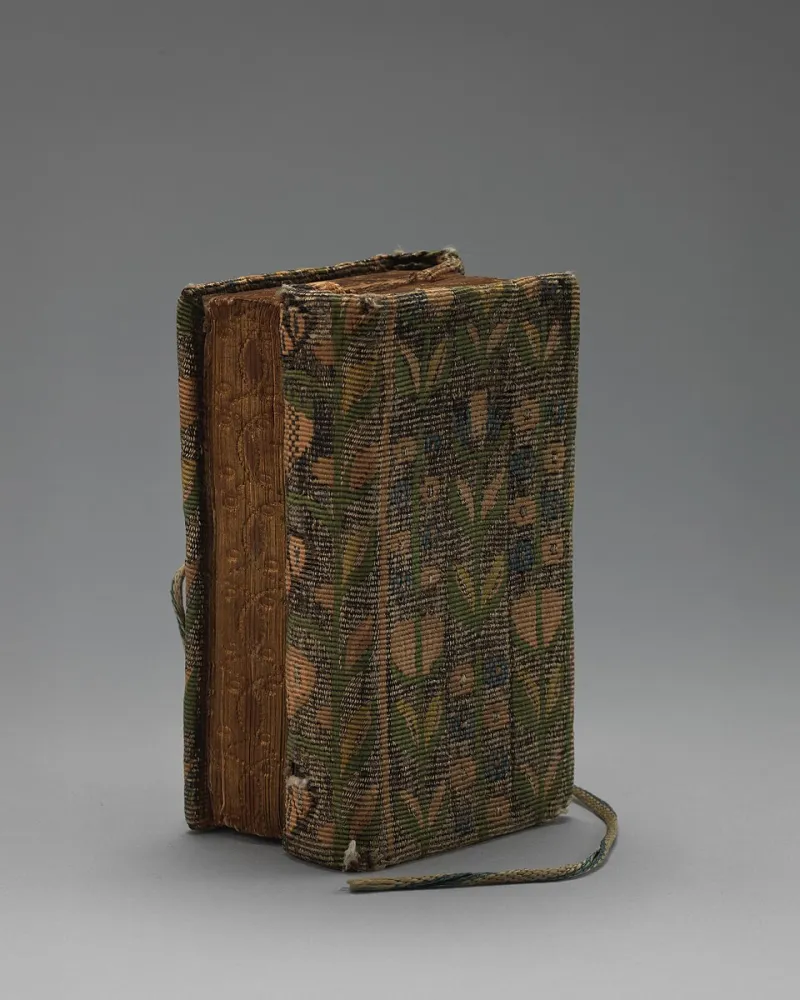
Photo: Creator:William Sheldon, CC0, via Wikimedia Commons
Most of us spend months on the words and about forty minutes on the binding. That ratio is backwards. Binding decides how the thing opens, whether a heavy reader will crack the spine by chapter two, and how much of your budget disappears before a single copy sells.
What follows is a working breakdown of the five methods UK small presses actually use, with honest cost bands and the awkward trade-offs nobody puts on the quote sheet. Prices are per-copy estimates for short runs in 2026, based on UK trade printers; treat them as ranges, not gospel.
Perfect binding: the default, and its hidden tax
The squared-off paperback spine. Almost every trade paperback you own is perfect bound — pages gathered into a block, the spine edge milled rough, then glued into a cover.
- Page counts: roughly 40 pages minimum before the spine looks convincing; 60–80 is more comfortable. Above about 400 pages the block gets stiff and the gutter tightens.
- Cost: typically £1.80–£3.50 per copy at 250–500 copies on standard stock, rising with page count and paper weight.
- The catch: it does not lie flat. Not really. It also resists cold better than heat — leave a run in a van over a hot weekend and you may find the glue has relaxed.
For fiction and standard non-fiction, perfect binding is fine. It is the sensible, unglamorous choice. Just don't ask it to behave like a sewn book.
Saddle stitching: cheap, quick, and only for the slim
Two or three wire staples through the fold. It's the binding of zines, poetry pamphlets, programme notes and the sort of 48-page manifesto you can post for a large letter rate.
- Page counts: keep it under 64 pages total, and under 48 if you're using heavier paper. Otherwise the book fans open and the staples pull through the fold — a failure mode known as creep, and it looks exactly as bad as it sounds.
- Cost: often £0.60–£1.40 per copy at short runs. It is the cheapest route to a bound book by a wide margin.
- The catch: page counts must be a multiple of four, and the middle pages sit proud of the outer ones unless your printer trims for creep.
If your page count fits, saddle stitching is genuinely good value. If it doesn't, don't push it.
Smyth sewing: the one that lies flat
Thread through the fold of each section, then sections sewn together and glued — or cased in — afterward. This is the method to reach for when the book needs to open wide and stay open.
- Page counts: 48 upward, no real ceiling. Sewn blocks handle 600 pages without complaint.
- Cost: expect roughly £3.20–£6.00 per copy more than perfect binding at similar trim sizes, partly because sewing is slower and often paired with a hard case.
- The catch: it's a premium decision. The per-copy premium is modest at 500 copies and painful at 50.
Cookery books, workbooks, music scores, art monographs, anything a reader will hold open with one hand while doing something else — this is your method. A sewn paperback that lies flat at the recipe page is a small, permanent kindness.
Wire-O: the spiral-bound workhorse
Twin-loop wire through punched holes. It lies dead flat, folds right back on itself, and looks faintly institutional — which is either a problem or a feature depending on your list.
- Page counts: anything from 20 to 500; the wire length is cut to suit.
- Cost: around £2.50–£5.00 per copy including punching, plus a cover that usually needs to be a slightly heavier stock.
- The catch: it doesn't shelve well spine-out because there's no spine to print. Retailers can be sniffy. Wire can also snag on soft bags.
For field guides, teacher resources and anything meant to be used outdoors or photocopied, Wire-O beats every alternative. Just don't expect Waterstones to fight you for it.
Case binding: the hardback, properly done
Boards, a spine, head and tail bands, and almost always a sewn block inside. This is the binding people mean when they say a book feels made.
- Page counts: 64 pages minimum to justify the boards; no upper limit worth worrying about.
- Cost: £7–£14 per copy at 250–500 copies, depending on cloth, jacket, banding and whether you print the case.
- The catch: the whole thing is slower. Add two to three weeks to your schedule, and expect minimum order quantities that make 100-copy runs uneconomic.
Case binding is where small presses most often overspend. It's the right call for a gift edition, a limited run, or a book whose physical presence is the pitch. For everything else, a sewn paperback with a decent cover board does most of the job at half the price.
The questions to put to your printer
Before you sign off, get answers in writing to these:
- What's the minimum and maximum page count for this method at my trim size?
- Is the page count rounded to a multiple of four — and does that change my extent?
- What is the grain direction of the text paper? (Wrong grain, and the book will fight you every time it opens.)
- What allowance do you need in the gutter for my chosen binding? Perfect binding eats more than sewing.
- Are the cover and text stocks compatible for this binding — especially with recycled or bulky stocks?
- What's your creep or shingle allowance on saddle-stitched work?
- Can I see a physical dummy before the full run?
That last one matters more than the rest combined. A £60 dummy on a 500-copy run is the cheapest insurance in publishing.
So: sewn or glued?
Choose sewn when the book must lie flat, will be used hard, or is priced to feel substantial. Choose perfect bound when you want a conventional paperback at a sensible price and the reader will hold it in one hand. Choose saddle stitch for slim, cheap, quick. Choose Wire-O when function beats shelf appeal. Choose case binding when the object itself is the argument.
And whatever you choose, ask for the dummy. Your future readers — and your returns rate — will thank you.