Hot Metal, Cool Covers: Inside the UK's Letterpress Comeback
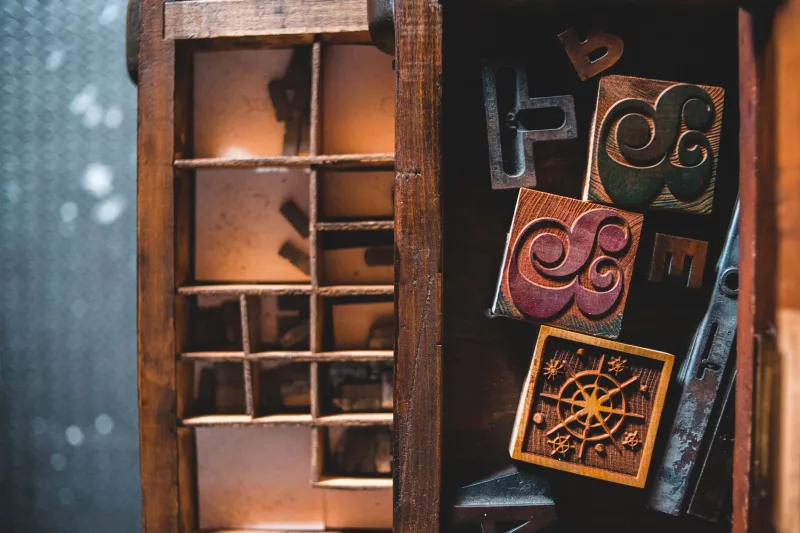
Walk into a working letterpress studio in 2026 and the first thing you notice is not the machines. It is the sound. A Heidelberg windmill clicks and sighs like something alive, and the smell of rubber rollers and ink sits in the air. For a few years, this scene felt like heritage theatre. Not now. UK small presses are booking foundry time again for covers, limited editions and author gifts, and the work is not nostalgic. It is commercial, tactile and quietly ambitious.
The revival is not about replacing digital print. It is about using letterpress where it earns its keep: the cover that makes someone pick the book up, the edition that feels like an object, the thank-you card that an author actually keeps. If you are weighing up a commission this year, here is the practical view from the press floor.
Why small presses are booking press time again
Three things have shifted. First, readers are tired of screens, and a deep impression on a cotton stock is a physical argument that a PDF cannot make. Second, short-run letterpress is more accessible than it used to be. Photopolymer plates mean you do not need a full metal type collection to print a two-colour jacket, and many studios now offer a design-and-print package aimed at publishers rather than wedding stationery. Third, limited editions have found a willing market. A run of 150 or 250 copies with a letterpress cover can carry a higher cover price without feeling cynical, because the object justifies it.
The result is a busy diary. Studios that once survived on invitations and business cards are now taking book work from indie presses, poetry imprints and self-publishing authors who want a signature edition. That is good news, but it means you need to plan earlier than you would for digital print.
What letterpress does well — and what it does not
Letterpress is brilliant for covers, jackets, belly bands, bookplates, certificates, invitations and small gift items. It is less suited to long text pages, four-colour photographic imagery and anything that needs perfect, even coverage across a large solid. The impression is the point, but it is also a limitation: heavy forms can distort fine detail, and very fine reversed type can fill in.
Most modern book work uses photopolymer plates rather than metal type. That is not a compromise. It gives you cleaner edges, easier repeat runs and more freedom with artwork. But you still need to design for the process. Think in spot colours, not CMYK. Think in texture, not gradients. Think about how the paper will take the impression, not just how the file looks on screen.
Commissioning letterpress: costs, lead times and files
Costs vary by studio, run length, number of colours and paper. As a rough guide, expect plate and set-up costs from around £60 to £150 per colour, press time at £70 to £130 an hour, and paper on top. A short run of 100 A6 one-colour cards might land between £250 and £450. A two-colour cover run of 250 copies can sit anywhere from £900 to £1,800 depending on stock, size and finishing. Delivery and extra proofs add to that.
Lead times are the part people underestimate. Three to eight weeks is normal; six to ten weeks before Christmas is common. Ask for the studio's booking date, not just the production time. If your book has a launch date, work backwards and add a buffer.
File preparation matters. Supply vector artwork with fonts outlined. Use spot colours and label them clearly. Include at least 3mm bleed and keep critical content well inside the trim. Avoid hairlines below 0.25pt, and do not expect tiny reversed type to hold. If you are using a colour build, ask the studio how it will separate. Always request a proof on the intended stock, and if the budget allows, a paper dummy. Letterpress is a physical process; a screen proof will only tell you so much.
Two studios worth knowing
The Northern Type Works in Leeds is a good example of the new book-led studio. It runs a pair of restored Heidelberg presses and specialises in jacket work, limited-edition covers and slipcase labels for small presses. The team is comfortable with publisher timelines and will tell you honestly when a design will not suit the process.
Calder & Case in Bristol comes at it from the gift and edition side. It handles bookplates, author cards, presentation boxes and short-run covers, with a strong preference for metal type and cotton stocks. If you want a run of 100 keepsake items rather than 1,000 commercial jackets, this is the kind of studio to speak to.
Neither studio is a cheap alternative to digital. They are a different product. The question is whether your book benefits from that difference.
When letterpress is worth the investment — a checklist
- Your run is small: usually under 500, often under 250.
- The cover or gift is the hero, not a detail buried in the production schedule.
- You can afford a higher unit cost and still make the numbers work.
- Your launch date has room for proofs, press time and drying.
- The design uses type, line work, texture or simple shapes rather than complex imagery.
- Your audience values craft, collectability or a sense of occasion.
- You can store, pack and fulfil the edition without damaging it.
- You have vector artwork and can supply spot colours cleanly.
- You accept natural variation in impression and paper.
If most of those are true, letterpress is not an indulgence. It is a positioning decision. If you need 2,000 copies in three weeks for a mass-market price, it is the wrong tool. Book a studio visit anyway. Ask to feel the paper. The answer usually becomes obvious in the hand.
Foundry Press is about books made well, from manuscript to press. Letterpress is one part of that story — not the whole story, but a very good page in it.