Your Book Has a Birth Certificate. Most Publishers Throw It Away.
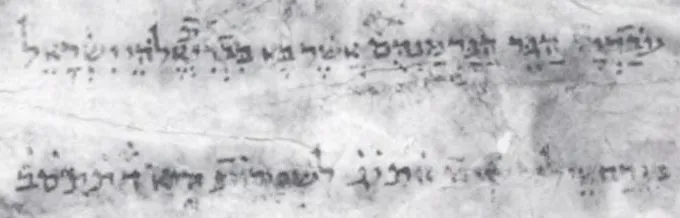
Photo: Obadiah the Proselyte, Public domain, via Wikimedia Commons
Open a book printed in 1955 and you'll often find, at the back, a small block of type telling you the typeface, the paper, the binder, the printer, and sometimes the name of the person who set it. Open a book printed last month and you'll usually find nothing at all — or a line of barcode and a URL.
That little block is a colophon, and its disappearance is one of the quieter losses in modern publishing. I think UK small presses should bring it back, and I think they should do it for reasons that are frankly commercial.
What a colophon actually is
The word comes from the Greek kolophon, meaning summit or finishing touch — the same root as the hill at the end of a race. In medieval manuscripts it was the scribe's sign-off: who copied the text, where, when, and for whom. Early printers kept the habit. It is, in the most literal sense, the book's birth certificate.
It is not the copyright page. Copyright pages are legal instruments and read like it. The colophon is a making-of note: the materials, the method, the people.
Why it matters more now than it did then
Here's the uncomfortable truth about the current book market. A reader can order a paperback tonight and have it arrive tomorrow, printed on demand, with no printer's mark, no paper description, nothing to distinguish it from ten thousand other objects. That's efficient. It's also completely anonymous.
A colophon is the opposite of anonymous. It says: someone chose this paper. Someone picked this typeface. Someone drove to the bindery.
For a small press, that's the whole pitch. You are not competing with Amazon on price or speed — you cannot, and you shouldn't try. You are competing on the fact that your book is a made object with a traceable history. The colophon is where you say so, in public, on the page.
What independent UK publishers are doing
It's not a dead form. Several small UK houses have quietly kept it alive. Poetry imprints frequently close with a note on the paper stock and the run size — often because the run is small and worth stating. Fine-press and letterpress outfits lean into it hard, naming the press, the type and the edition number. A few nature and food imprints have started listing the FSC-certified stock and the printer, which doubles as sustainability disclosure.
The pattern is consistent: the presses with the strongest sense of themselves as makers are the ones still printing colophons. That is not a coincidence.
What to put in yours
You don't need to be a fine press to do this well. A workable colophon covers:
- Typefaces used, and the foundry or designer if notable
- Paper stocks for text and cover — brand name, weight, and certification if you have it
- Binding method (sewn, perfect bound, cased)
- Printer and bindery, named
- Print run size, and whether it's a first edition or a reprint
- Designer, typesetter and illustrator credits
- Where it was printed — town and country
Keep it to eight or ten lines. Set it smaller than the body text — 8pt is traditional. Put it at the back, after the index, on the last recto if you can manage it.
A template you can steal
This edition of [Title] was set in [Typeface] at [size] on [paper stock, weight], printed by [printer], [town], and bound by [bindery] in [method]. Cover printed on [stock]. First edition, [print run] copies. Designed by [name]. Printed in [country] on [certification] stock.
That's it. Nine lines. It costs you nothing but a decision and a few questions to your printer — who will almost certainly be pleased you asked.
The objection, and the answer
Isn't this self-indulgent? It can be. A colophon that lists every person who ever touched the manuscript, in six paragraphs, is tedious. But the version above is a page of information, not a memoir, and readers who care about books — the ones who buy from independents rather than algorithms — genuinely do read it. Ask anyone who works in a bookshop how often customers bring the colophon to the till.
There's also a collector angle. Stating the print run turns a book into a known quantity. Five hundred copies is a fact that creates scarcity and a small, honest thrill of ownership. It costs you a line.
Make the making visible
Publishing is full of invisible labour — the proofreader, the typesetter, the person who spotted that the grain was running the wrong way. A colophon makes a little of that visible, and in doing so it tells the reader something true: that this book was made by people, on purpose, in a particular place.
That's not nostalgia. That's positioning. And it takes about twenty minutes to write.